01 Soundcheck · IIC Idea Café · Hyderabad
The booking layer for live music. Post your event, get three verified, priced, confirmed-available acts in under an hour.
02 How we booked one band
Our fest committee. Last year. One act.
Instagram. No prices. No confirmed dates.
That's the entire product.
03 The problem nobody names
This asymmetry is the whole game. Every honest analysis of this idea starts here — and most pitches in this category skip it.
Wedding and event planners (already taking 10–20% and already owning the relationship). Venue-recommended acts. Instagram DMs. WhatsApp groups of local musicians. Someone's cousin.
76% of Indian wedding bookings still happen offline, with online penetration climbing roughly three percentage points a year. It has stayed offline for reasons — not because nobody built the app.
04 Market sizing, honestly
What pitches claim
India's wedding industry — roughly $130 billion, 8–10 million weddings a year. This is what our customers spend, on everything. Quoting it as a TAM is the fastest way to lose a room.
What we can actually earn
Annual platform revenue if every live-music booking in India ran through a 10% marketplace. About 0.1% of the number above. Still a real business.
India TAM · gross bookings
≈ $1.35 billion of live-music gigs a year
India TAM · platform revenue @ 10%
≈ $135 million. This is the number that matters.
Top-down cross-check: organised live events at ₹14,500 crore in 2025 — growing to ₹19,600 crore by 2028 — plus the far larger unorganised personal-events market lands in the same ₹10,000–15,000 crore GMV range. Two independent methods, same order of magnitude.
05 TAM → SAM → SOM
Narrowing honestly, all the way down to what one student can actually earn in year one.
Anchor · weddings
Around 3.5 million weddings cluster into the November–January window each year, with roughly $51.2 billion of spend in that period alone. Extreme seasonality, both ways.
Anchor · spend
The average Indian wedding budget in 2025 was ₹39.5 lakh, up 8% year on year. Hyderabad averages ₹37 lakh — near the top of Indian cities.
Anchor · supply of buyers
488 colleges in Hyderabad district alone, 2,083 across Telangana. Hyderabad has the second-highest college count of any Indian district.
06 Competition
Saying this out loud is the point. Judges know how to search. Pretending these companies don't exist destroys credibility faster than any weakness in the idea.
| Player | Scale | Model | Threat |
|---|---|---|---|
| StarClinch | 30,000+ verified artists across 14 categories. India's leading artist booking platform. EMI payment on large bookings. | 15–20% commission | DIRECT · DOMINANT |
| Live101 | 10,000+ live artists, 50+ cities — including Hyderabad | Commission | DIRECT · IN OUR CITY |
| Gigstart | Founded 2014, launched with 1,800 curated artists, 120+ cities. Explicitly built on the 10-million-weddings thesis. | 10% convenience fee | DIRECT · OLDER |
| Event & wedding planners | ~50,000 professionals nationally. Already own the customer relationship. | Bundled 10–20% | OWNS THE BUYER |
| Instagram + WhatsApp | Free. Universal. Zero friction. | None | THE REAL INCUMBENT |
| Encore (UK) | 30,000+ bookings since launch, sub-30-minute average quote time | 20% from artist | NOT IN INDIA |
| GigSalad · GigMasters · Gigmit | Largest US/EU marketplaces. Tiered listing fees $269–$499/year. | Commission + listing | NOT IN INDIA |
Where we lose, plainly
Price: parity at best — undercutting to 8% is a discount, not a moat.
Features: behind. They have payments, verification, EMI, apps, reviews.
Technology: no advantage. This is search, profiles and payments. Anyone can rebuild it in three weeks.
Where we can actually win
Speed: incumbents are browse-then-enquire-then-wait-two-days. Instant quotes is a real, provable gap.
Distribution: free, trusted access to the Hyderabad campus network. StarClinch has to buy that traffic; we already live in it.
Straight answer: as a national catalogue, this idea is StarClinch with a different landing page. It only becomes defensible as one narrow wedge, one hard promise.
07 Founder–market fit
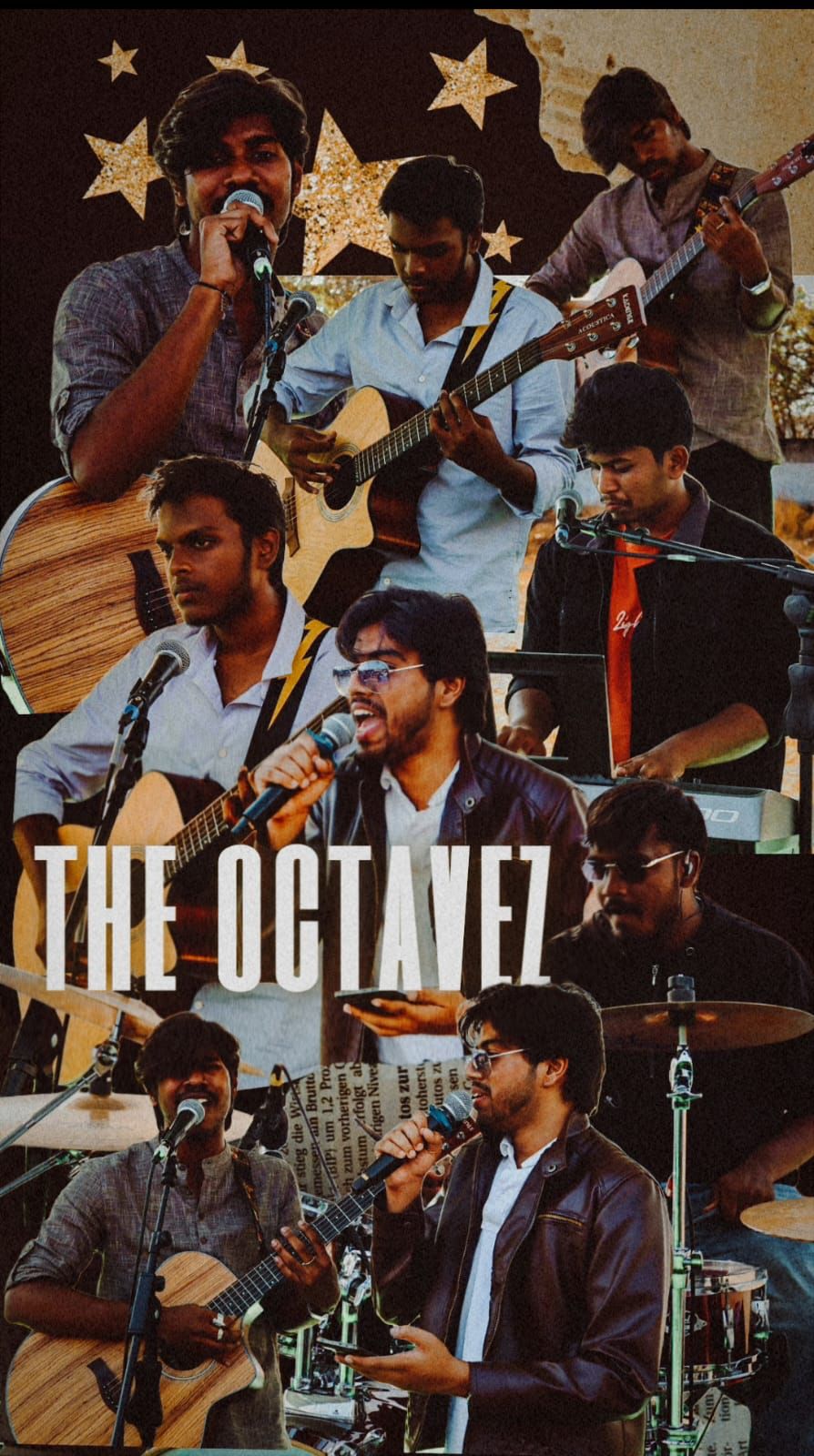
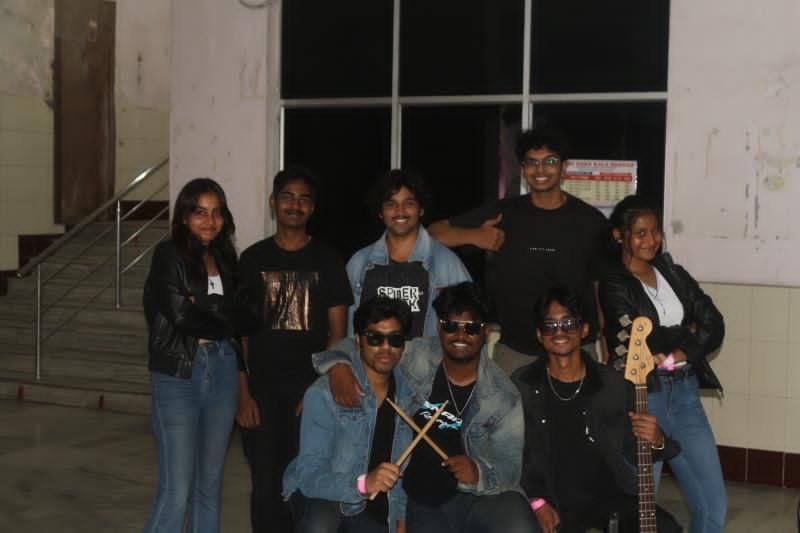
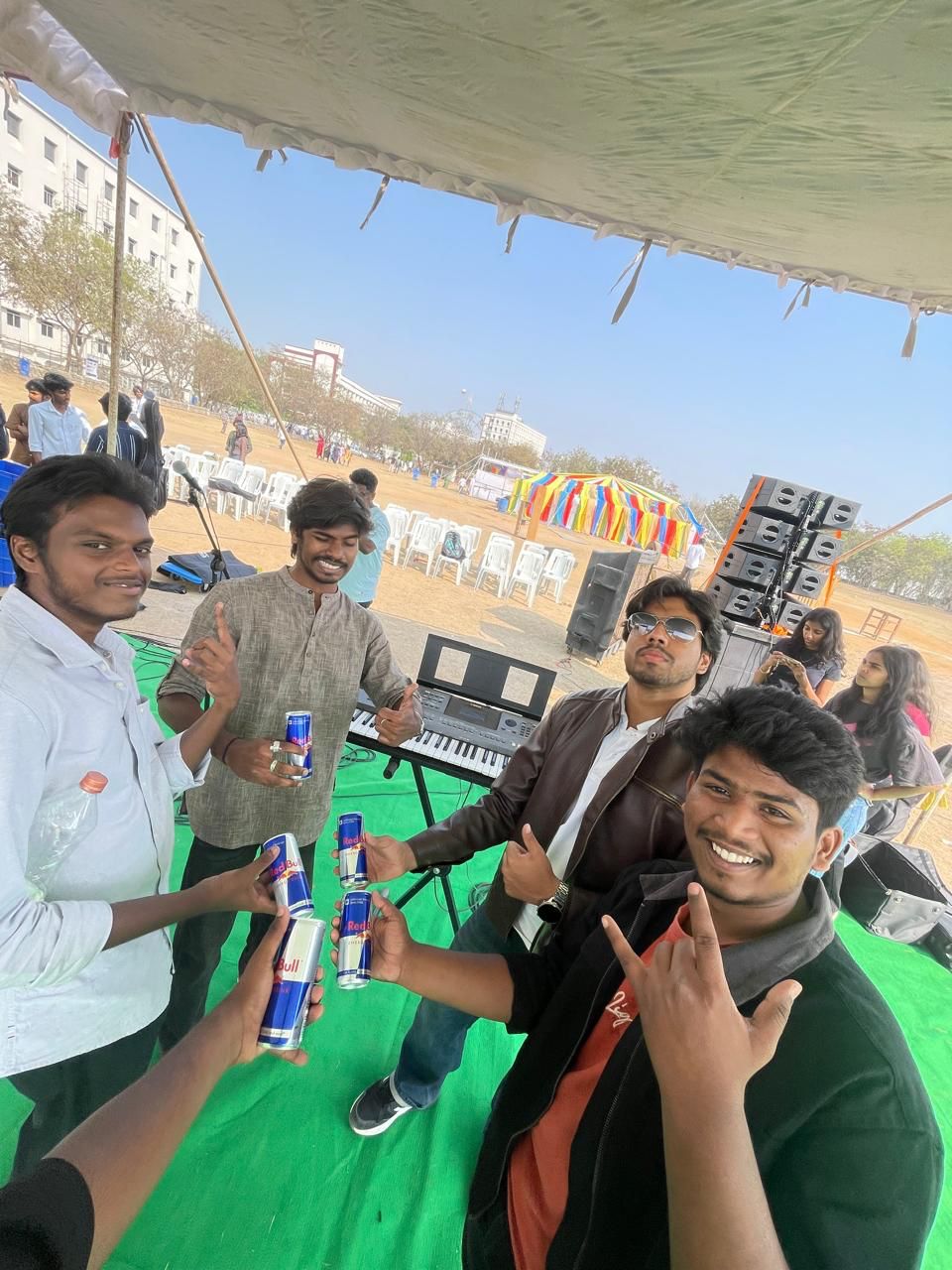
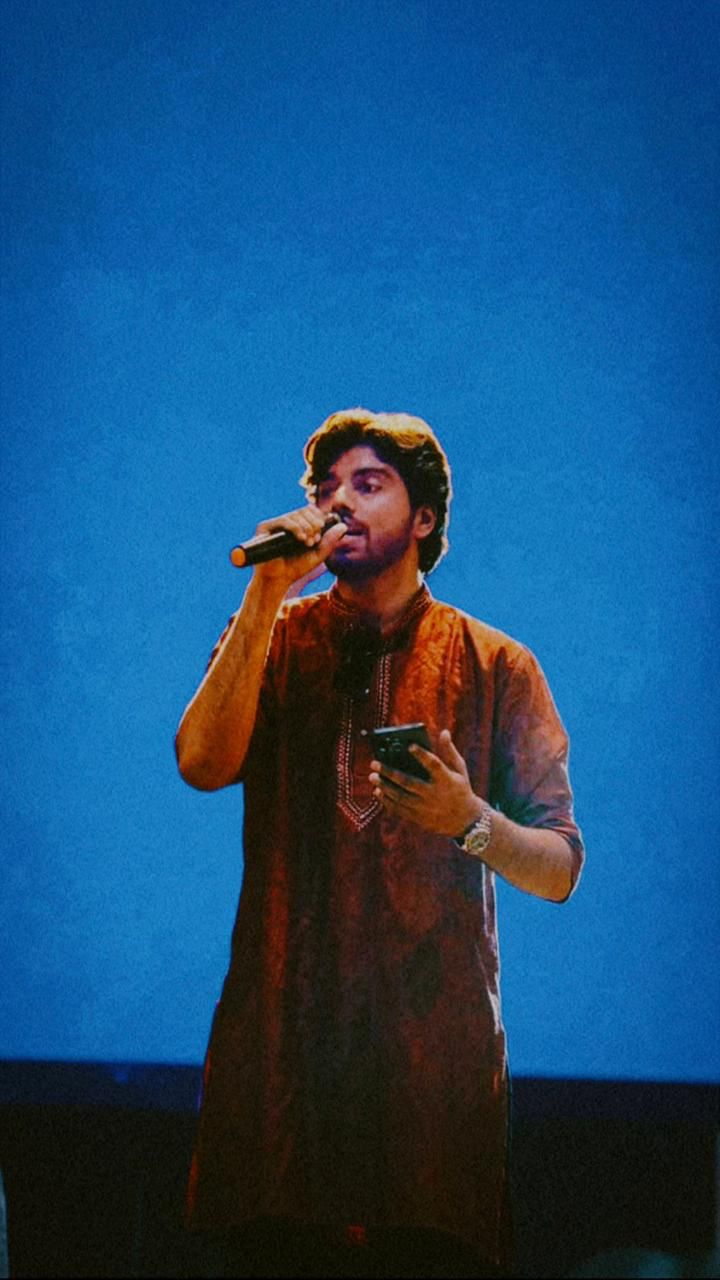
I play part-time, and I get paid for it. So I'm not a founder who has to go out and find supply — I'm already standing inside it.
Day-one supply
Names already in my phone, not a projection. This is the answer to the cold-start problem — I don't have to buy my first hundred artists.
Gigs played
I've been paid late, been ghosted after a soundcheck, and lost a booking because nobody knew I was free. Every feature here comes from something that happened to me.
What a spreadsheet can't tell you
I know what a four-piece actually charges for a Hyderabad college fest versus a Friday pub slot — because I've quoted both. Pricing on this platform starts from lived numbers.
Why this matters more than it looks: the hardest thing about a two-sided marketplace is the first side. StarClinch can outspend me on advertising forever — they cannot be a musician in Hyderabad who already knows the other musicians.
08 Beachhead
We start where the money repeats. This single decision defuses two of our three fatal risks — and it's the reason we're a business and not a features list.
Ideal initial customer
The cultural secretary of a Hyderabad engineering college, 19–22, fest budget ₹50,000–₹3,00,000, needs 2–4 acts booked in three weeks, currently doing it over Instagram DMs.
Why them, not a wedding family
Reachable — I'm one of them. Books on a predictable annual cycle. Talks to every other college. Digital-native, so zero behaviour change required.
Second buyer: live venues
Around 600 Hyderabad pubs and cafés booking music every month, not once a lifetime. Repeat buyers with invoices, GST and accountability needs.
Repositioned
Rapido for musicians — any artist, any event, anywhere.
The booking layer for Hyderabad's campus and nightlife circuit. We start with the 400+ colleges and 600+ venues that book music every month.
09 Value proposition
Discovery is commoditised. Nobody in India is selling the thing that actually goes wrong.
Promise 01
Encore markets a sub-30-minute average quote time because speed is provable and marketable. Incumbents here take days.
Promise 02
No platform reviewed reliably solves "this artist is already booked that date." It's the number-one time-waster for organisers.
Promise 03
If they no-show, we send a replacement. This is what buyers actually lose sleep over — and it's what justifies the fee.
10 Brutal critique
Three of these are fatal. I'd rather name them than have a judge find them in thirty seconds.
No artists means no hosts means no artists. StarClinch already has 30,000 artists. We have zero.
Host and artist meet on the app, then close on WhatsApp to dodge the 10%. Both sides are actively motivated to cut us out, and a live gig needs coordination calls anyway — so we can't hide contact details. This is what actually kills Indian service marketplaces.
A wedding family books once in a lifetime. CAC must be repaid by a single transaction worth ₹3,500 of revenue.
Three incumbents with 5–10 years of supply, SEO and payment infrastructure.
One band no-shows at one wedding and the damage is asymmetric — we get blamed, not the artist.
Artists want advances, hosts want guarantees. Holding money means gateway costs, refund policy and possible payment-aggregator exposure.
10% of ₹35,000 is ₹3,500. After CAC and support there is no room to spend on ads.
3.5 million weddings compress into Nov–Jan; fests into Feb–Mar. Four dead months with fixed costs.
Offline supply hustle plus engineering plus a degree. Founder bandwidth is the most underrated killer of student startups.
Artist contracts, GST on commission, GST on event tickets recently raised to 28%, and PPL/IPRS public-performance licensing for covers at commercial venues. Indie acts ignore this; a platform that formalises bookings becomes visible.
The one fix for risks 02 and 03
Stop selling a transaction. Sell a repeat relationship. A college booking four acts a year needs invoices, GST, accountability and a backup guarantee — they stay for the guarantee, not the discovery. A wedding family never will. Repeat institutional buyers are the answer to both fatal risks.
One risk in our favour: live events growth is shifting beyond the metros, with the "Next 10" cities leading the expansion wave. Timing is the best macro argument we have.
11 Business model
Every surviving player in this category converged here — StarClinch at 15–20%, Gigstart at 10%, Encore at 20%. Free supply, aligned incentives, zero friction to list.
One ₹35,000 booking
Charged to the organiser as a visible service & guarantee fee, not skimmed from the artist. Artists are the scarce resource and they will leak off-platform to save 20%. Buyers won't blink at ₹3,500 on ₹35,000 — if the guarantee is real.
| Stream | Detail | Live from |
|---|---|---|
| Booking commission — 10% | Visible service & guarantee fee on the organiser. Artists join and list free. | Day 1 |
| College fest package — ₹9,999 flat | Three acts sourced, contracts, backup act on standby. Higher margin than 10% commission and structurally leak-proof. | Month 3 |
| Artist Pro listing | ₹999–₹2,999/year for boosted placement, verified badge, analytics. GigMasters proved the model at $269–$499/year. | Month 6 |
| Venue subscription | ₹2,999–₹5,999/month for pubs needing 8+ gigs monthly: guaranteed fill, one invoice, replacement guarantee. | Month 9 |
We push toward the fixed-fee packages faster than feels natural. They solve leakage, seasonality and unit economics at the same time.
12 MVP & validation
Success is three real completed bookings and ₹10,000 of real gross bookings — with zero code written.
Stack
Next.js + Tailwind — SEO matters; "band for wedding Hyderabad" is a real search
Supabase — auth, DB, storage; skip writing a backend
Cloudinary free tier — or just embed YouTube / Instagram
Razorpay — only when needed
WhatsApp Business API — manual WhatsApp at first, honestly fine
Vercel free tier
Time & cost
No-code validation 1 week · ₹0
Real MVP, part-time 6–8 weeks · ₹0 dev
Domain, hosting, storage ₹3,000–8,000/yr
First-user acquisition ₹5,000–15,000
Total ≈ 2 months · ₹8,000–25,000
Do the no-code week first. If a Google Form and an Instagram page can't get three bookings, code won't save it — and two months are saved.
Week 1 · Supply
≥10 agree to list and share real prices. Under 5 = supply thesis broken.
Week 2 · Demand
≥8 of 20 accept the fee unprompted. Under 5 = the revenue model is fiction.
Week 3 · Concierge
Track: enquiries · enquiry→booking rate · median response time · ₹ collected
Week 4 · Price & decide
Waitlist: ≥50 artists, ≥25 organisers, all organic
| Signal after 30 days | Decision |
|---|---|
| 3+ completed paid bookings | BUILD THE MVP |
| Enquiries but zero paid bookings | REPOSITION — interest without willingness to pay |
| Fewer than 5 enquiries all month | PIVOT THE WEDGE OR THE IDEA |
| >50% of bookings tried to go around us | LEAKAGE FATAL — go fixed-fee immediately |
13 Verdict
Promising,
needs refinement
Not a strong startup opportunity yet — and not a weak one either. The category is proven and already occupied. Differentiation is the honest ceiling until the wedge is committed to.
The profile: high buildability, weak defensibility. That is a great student project and a real small business, and a hard venture pitch. Worth saying out loud rather than dressing up.
14 The pitch · 60 seconds
Last year our fest committee spent eleven days and forty Instagram DMs to book one band — and we still didn't know if they'd show up.
That's the norm. India hosts ten million weddings a year and our live events industry grew 44% last year, but 76% of these bookings still happen entirely offline, through personal networks.
Music Man is the booking layer for live music. Post your event, get three verified, priced, confirmed-available acts in under an hour.
We're not starting with weddings. We're starting where the money repeats: Hyderabad's 400-plus colleges and 600-plus live venues, who book music every single month.
Platforms like StarClinch and Live101 already proved Indians will book artists online. Nobody has solved the thing that actually goes wrong — availability and no-shows. So we sell reliability: verified calendars, and a guaranteed backup act.
We take 10% from the organiser. Artists list free.
Ten thousand rupees and thirty days is all it takes to prove this. I'd like to go find out.
"StarClinch already exists. Why you?"
They're a national catalogue. I'm a local operating system for one circuit. In Hyderabad's college market I can have more real, verified, availability-confirmed acts than they do — because I'll physically know every one of them.
"What stops people booking directly on WhatsApp after finding the artist on your app?"
Nothing, for a one-off wedding — which is exactly why I'm not starting there. A college books four acts a year and needs invoices, GST, accountability and a backup guarantee. They stay for the guarantee, not the discovery.
"How big can this get?"
Live-music booking in India is roughly ₹11,500 crore of gigs a year — about ₹1,150 crore of platform revenue. My Telangana serviceable market is ₹165 crore of bookings. I'd be happy to own 5% of that in four years. I'm not going to pretend this is the ₹10 trillion wedding industry. It isn't.